
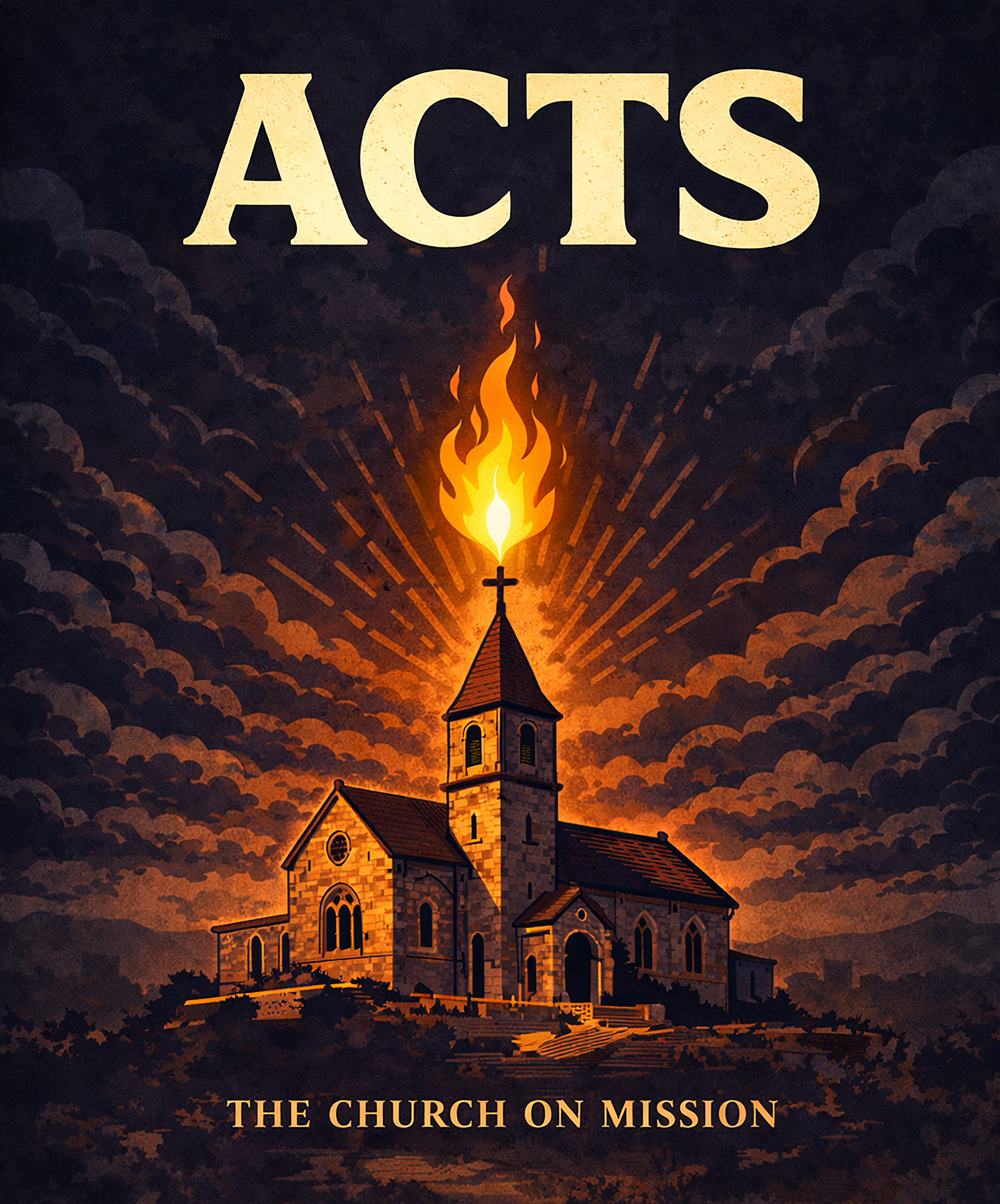
Acts: Is It Possible? | Josh Harrison
It’s difficult to read Acts 2:42–47 and not feel both inspired and impossibly challenged. The early church’s radical devotion—learning together, sharing everything, praying with fiery expectancy—often feels like an unreachable ideal, especially amid the whirlwind of modern life in Orange County. And yet, as Josh Harrison invites us to ask, what if we refused to let cynicism or circumstance steal that vision from us? What if, rather than moving on, we wrestled together with how such devotion might actually take shape here and now?
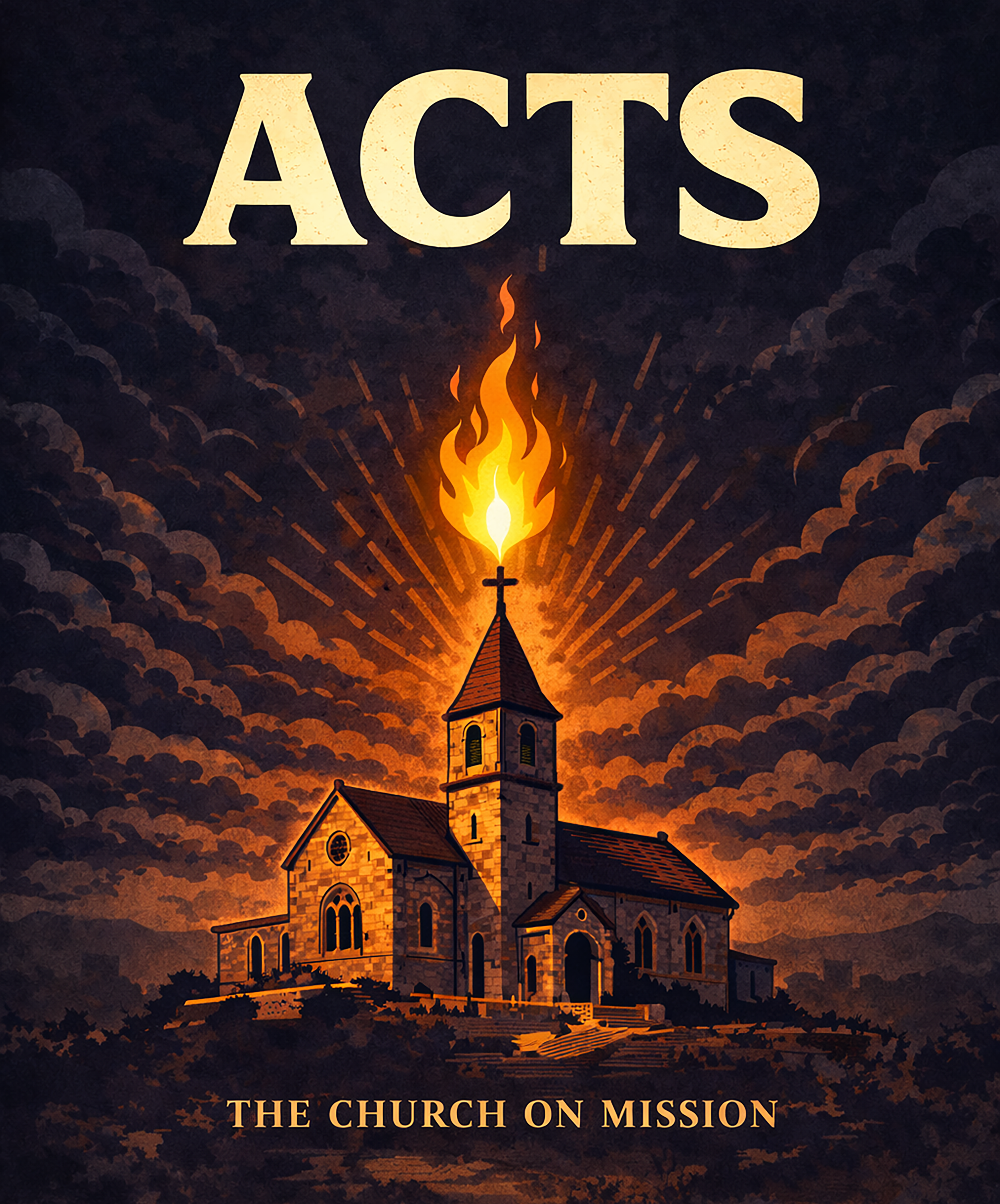
Acts: A 'No Matter What' Community | Josh Harrison
What made the early Church so powerful and world-changing. The answer is detailed in Acts 2:42-47: their stubborn devotion to teaching, radical generosity, prayer, and the breaking of bread. These weren’t just boxes to check, but the core convictions of a “no matter what” community. Against all odds—amid cultural, political, and social complexity—they pursued a unity and diversity that shocked the world and drew people in daily. Does such a church exist today? Could it again? The world is longing to find out.
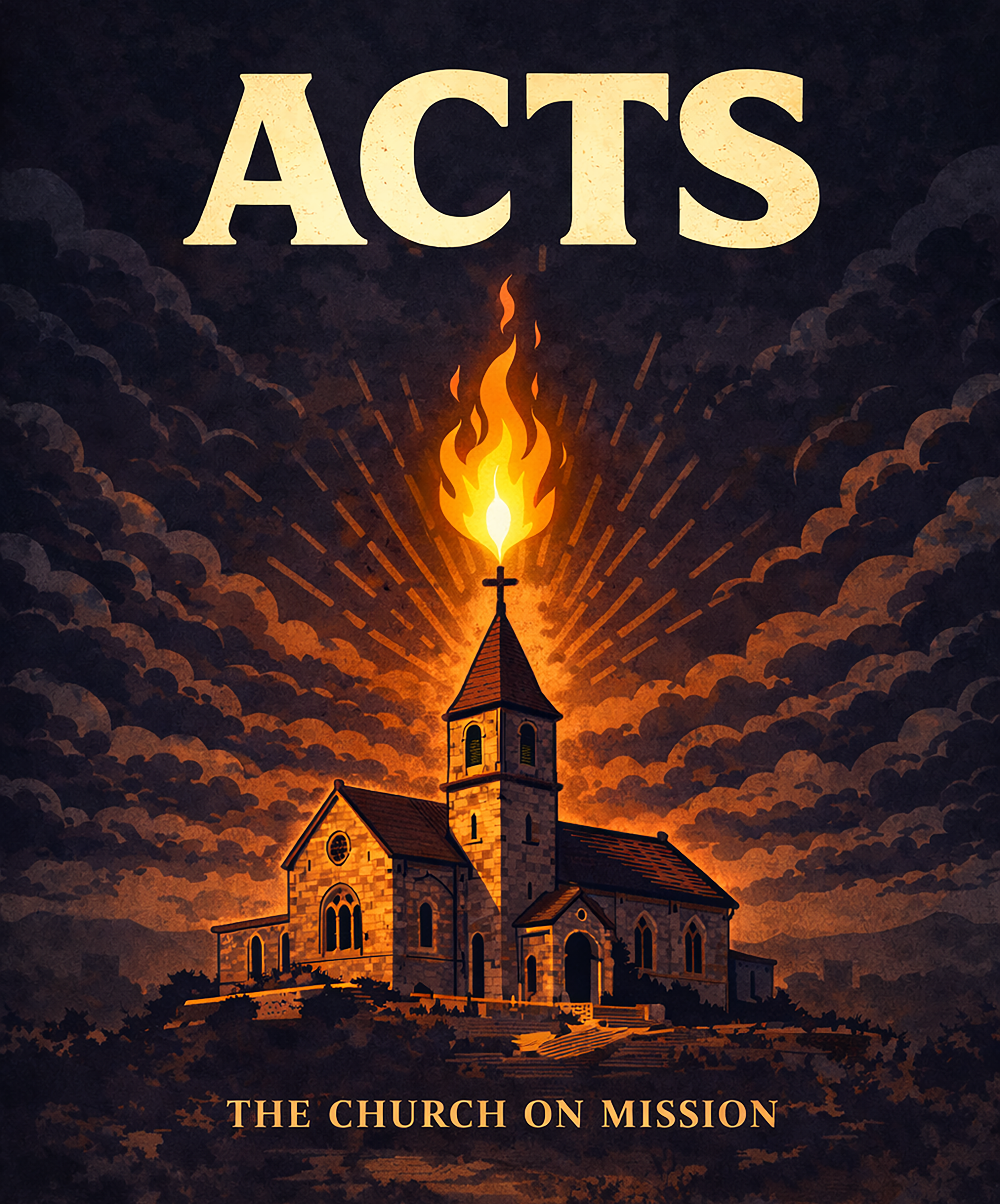
Acts: The End Times | Josh Harrison
It’s been just over a month since we launched our Acts series, so perhaps a quick recap is in order.
We started by tracing our spiritual genealogy, looking back at the early church and asking what they believed about Jesus and themselves. What we found, again and again, is simple—these ordinary people were empowered by the Spirit, defined by mercy, and sent with a purpose to embody Jesus in the world. Contrary to popular imagination, “end times” are not about fear or chaos; Peter insists they are marked by resurrection, victory, and the presence of God. We stand on the cusp of a new age—merciful, powerful, and beautiful.
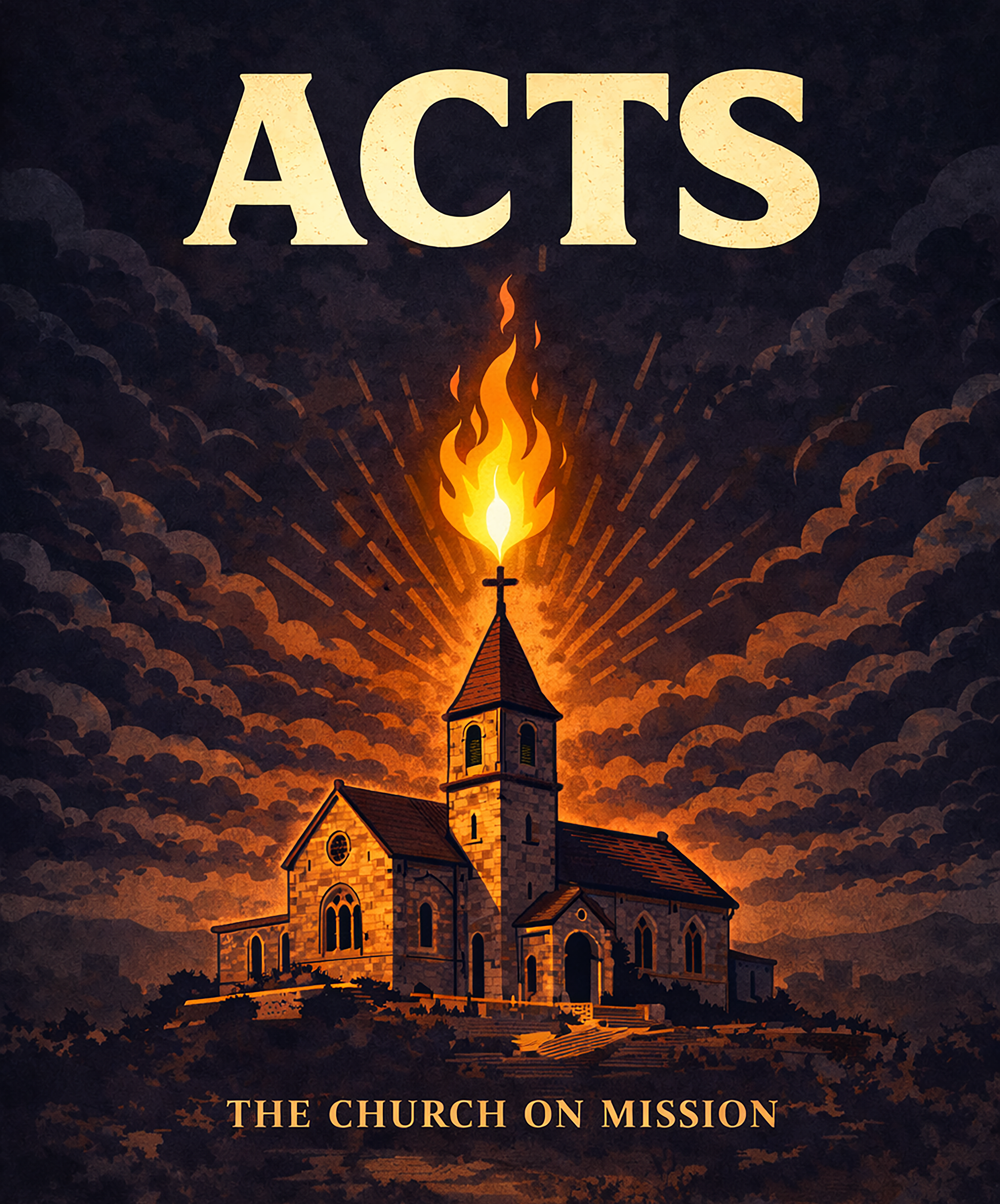
Acts: The Spirit of Adoption | Josh Harrison
It is perhaps easy, in looking at the events of Pentecost in Acts 2, to reduce the Spirit’s arrival to spectacle—wind, tongues of fire, languages spoken and understood as if by magic. We tend to ask, “What were the signs?” But let's look deeper. What if the greatest miracle was not what the disciples did, but who they discovered themselves to be? Jesus called the Spirit “the Advocate,” a Paraclete, sent not just to empower or instruct—but to assure us we are adopted, chosen, irrevocably loved. This changes everything. We live as heirs.
Acts: Pentecost | Josh Harrison
It’s been a few weeks since we started our walk through Acts, and perhaps a brief reflection is in order.
We’ve traced the Church’s story from confusion and fear, stumbling through the aftermath of Jesus' ascension, to the radical transformation at Pentecost—the moment the Spirit moved in, not to a building or a mountain, but to people. Fire, wind, and voices mark this act of God dwelling intimately within each believer. This changes everything. Church is no longer merely a gathering; it’s a place of encounter, forgiveness, and power. What happened in Jerusalem is still happening in Costa Mesa—and in us.
Acts: The Ascension | Josh Harrison
It is a curious thing, after centuries of Christian tradition, how one of the most extraordinary moments in the story of Jesus—his ascension—is so often overlooked. This week, we returned to the opening verses of Acts, asking not simply “What is the Church?” but “Who is this Jesus we gather around?” The earliest Christians staked everything on the belief that Jesus ascended—not as a disappearing act but as advocate, architect, reigning king, and giver of gifts. This one truth unlocks a deeper hope, a truer identity, and a more courageous mission.
Acts: Be My Witnesses | Josh Harrison
Last week we found ourselves at the threshold of Acts, asking a deceptively simple question: what is the church? Josh Harrison reminded us that, despite all we've accumulated—practices, traditions, and ambitions—the essence of the church isn't found in what we’ve built around Jesus, but in what he established at the start.
The early disciples, confronted by the resurrected Christ, understood neither the timing nor methods of God’s kingdom. Instead, they received two things: a gift (the Holy Spirit) and a mission (to be witnesses—embodiments of hope—beginning in Jerusalem and extending outwards).
May we live as witnesses today, expectant and empowered.

Acts: The Church is the Body of Christ | Josh Harrison
As we begin a new series in Acts, a brief recentering is in order. If you’ve spent any time in church, you’ve likely heard the phrase “Body of Christ” thrown around casually, as if it were merely a metaphor—a nice way to describe collective gifts. But in the earliest days, believers didn’t consider this figurative; they truly lived as Christ’s body, continuing his work on earth, animated by the Spirit. Their conviction transformed families, communities, and ultimately the world. As we plant and form this church, the question before us is: What might God do through us, if we truly embody this reality?
Advent 2025: Give us…Forgive us | Josh Harrison
Three weeks into our Advent series, we've been tracing the ancient contours of the Lord’s Prayer, exploring what it truly means to wait with both attentiveness and expectancy—a posture Jesus not only commands but embodies. Beginning with our Father who is both utterly holy and intimately close, surrendering our kingdoms to His, we've journeyed into the wilderness of dependence: “Give us this day our daily bread.” Here, Jesus teaches us not self-sufficiency, but radical daily trust. And when we inevitably fumble for control, He offers forgiveness, and calls us to extend the same mercy to others. This wilderness transforms us—together.
Advent 2025: Your Kingdom Come | Josh Harrison
Advent, as Josh shared, is more than the holiday season’s clutter and chaos—it’s a deliberate preparation for the arrival of the King. While culture grows busy, Advent invites us to make space, to nurture expectation and longing through prayer. This week, we explored the Lord’s Prayer: “Your kingdom come, your will be done.” What might shift in our lives if, in every circumstance, we surrendered our will for His? As we trust, anticipate, and pray, we become agents of God’s kingdom—bridging heaven and earth.
Advent 2025 - Our Father | Josh Harrison
For the first time in nearly a year, we have stepped out of The First Gospel series and into Advent—not so much a season as an invitation. Advent comes to us as both a memory and a promise, a time to prepare our hearts for the arrival of Jesus—past, future, and daily.
In this sermon, we explored the Lord’s Prayer: “Our Father in heaven, hallowed be your name.” Remarkably, Jesus invites us to hold together the awe of God’s holiness and the intimacy of calling Him “Dad.”
What if, this season, our preparation begins and ends in prayerful relationship?

The First Gospel - The Return | Josh Harrison
It’s been forty weeks since we launched our journey through the First Gospel series, tracking the thread of God’s goodness woven through every page of the Old Testament. Today, we reach the finale, as exile gives way to return—a story marked not simply by restored walls and temple, but by the rhythms, community, and expectation that define the people of God. The builders in the ruins remind us: true community is essential, worship is central, and our story is still unfinished. We wait, expectant, on the eve of Advent—for the King to make all things new. Let’s build, worship, and watch together.
The First Gospel - Good News for Dry Bones | Josh Harrison
It's been a little over two and a half millennia since Ezekiel found himself staring into a valley littered with dry bones—a vision both haunting and instructive. Why start here, in utter desolation? Because, as Josh Harrison reminded us, to truly grasp hope, we must first acknowledge the depth of our need. Israel’s story, our story, begins at the end of our own resources, when all attempts to save ourselves have failed. Into this lifeless valley God sends a person—Ezekiel—to speak life, to partner in resurrection. The Gospel always starts in the dark, but in the presence of the Resurrector, there is no such thing as hopeless.

The First Gospel - With Us in the Fire | Josh Harrison
"Exile" is not always a distant historical memory but, in many ways, the present condition of God’s people. Just as Shadrach, Meshach, and Abednego found themselves relocated, renamed, and tempted to bow to powers not their own, so too are we daily nudged toward forgetting who we are. Yet, the story reminds us: our call is not merely to survive Babylon, but to embody a distinct faithfulness within it. And what’s most stunning—God does not stand far off, but walks beside us in every fire, shaping even the flames into freedom.
The First Gospel: Jeremiah 29 - Living as Exiles | Josh Harrison
We are nearing the end of our First Gospel series, having traced Israel’s journey through upheaval, conquest, and exile under empires like Assyria and Babylon. This week’s meditation on Jeremiah 29 casts exile not as abandonment, but as God’s severe mercy—a refining season, not a defeat. In Babylon, God instructs his people neither to assimilate nor isolate, but to become ambassadors: deeply present, building relationships, seeking the city’s shalom, yet never forgetting their true home. We too, as followers of Jesus, are exiles. Our mission is to love and bless wherever God sends us, citizens of heaven living for the good of the world.

The First Gospel: The Gospel According to Jonah | Josh Harrison
Nearly everyone knows Jonah as “the guy swallowed by a fish,” but the real message of this ancient story is far deeper—and, perhaps, more unsettling. What happens when grace is given to people we can’t seem to love? What if God’s compassion extends to our enemies, and our call is not to curse but to bless, even those we’d rather condemn? This sermon invites us to reexamine our assumptions about who deserves forgiveness, about our posture toward those outside our circle, and, above all, about the radical mercy of God.

The First Gospel: The Gospel According to Micah | Josh Harrison
We find ourselves, once again, tracing old patterns—cycles of faithfulness and failure woven through the story of God’s people. This week, as we listen to Micah, we’re reminded that God’s call remains remarkably unchanged: act justly, love mercy, and walk humbly with your God. Yet, as Josh observed, our challenge is never the knowing, but the doing. What we need is not a new law or strategy but a new heart.
The First Gospel Part 34: The Gospel According to Isaiah | Josh Harrison
Over the past several months, we’ve walked through the Old Testament—not as a collection of moral tales or distant history, but as a living, unified story pointing toward a singular hope. In our new “First Gospel” series, we considered how, woven through the warnings of prophets and the failures of kings, God was preparing a different kind of answer: not simply a fresh set of rules, but a person. Isaiah’s vision isn’t just about a future king or an ethical teacher, but about the astonishing promise of a suffering servant—one who would not shout or crush, but who would bear our brokenness and, through compassion, change everything. This is the gospel according to Isaiah: cycles of striving give way to grace, and the world begins anew with a quiet, gentle hope.
The First Gospel Part 33: Isaiah - When God Shows Up | Josh Harrison
This week, as we near the end of our Old Testament journey, we find ourselves in Isaiah 6, the year when King Uzziah died—a moment marked by grief, instability, and fear. It’s here, in the shadow of loss, that Isaiah encounters the living God. His vision in the temple is not merely a scene of awe and trembling, but a profound lesson in transformation: when the ground shifts beneath us, our illusions of control are shattered, and the horizons of our souls expand. “Holy, holy, holy,” the angels cry—and Isaiah is undone, only to be remade by grace. This is how God shows up.

Reading the News with Jesus - Charlie Kirk
When tragedy strikes, our nation too often responds with outrage, blame, and political point-scoring — but Jesus shows us a better way.
In this post, I reflect on the murder of Charlie Kirk and what it reveals about the deep rifts in our nation and the Church. Drawing from John 11, I explore four ways Jesus teaches us to respond to tragedy:
💔 Weep with me – grieve deeply and honestly.
🔥 Get angry like me – aim our anger at evil, not people.
🙏 Believe in me – hold pain and faith together.
🔄 Repent and follow me – turn from division and live as resurrection people.
If we learn to respond like Jesus, we can become healers in a fractured world.